

In a world where customers move freely between online and offline touchpoints, brands no longer win through design “moments.” They win through design systems. The shift from digital-first ecosystems to integrated ecosystems marks one of the biggest transformations in brand experience today.
Organisations that stand out are those who are able to create integrated experiences across technology space, digital and content.
This is experience transformation.
The Age of Integrated: What It Really Means
“Integrated” is more than placing screens in a room or adding QR codes to an exhibit.
True integrated design blends physical environments, digital systems, and human behaviour into one seamless loop.
In practice, this means:
A visitor begins online, continues the journey in a physical space and the story continues digitally after the visit.
Each touchpoint recognises the user, remembers their context, and continues the narrative.
Brands can no longer treat digital and physical as separate teams, departments, or channels. They are one experience, lived across multiple dimensions.
Why Integrated Experiences Matter Today
1. Customers journey is important as a whole
Research Report from Mckinsey shows that consistency across all touchpoints is the strongest predictor of customer satisfaction and loyalty, stronger than the performance of any single touchpoint.
If your website is modern but your physical space feels outdated the brand feels outdated.
If your store is immersive but your app feels broken, the brand feels broken.
Integration = Trust.
Fragmentation = Abandonment.
2. Physical Spaces Now Behave Like Digital Products
Modern experience centres, retail formats, campuses, and workplaces now have sensor-driven interactions, app-linked identity systems, content personalisation, and AR-layered storytelling.
Integrated architecture is no longer static, it is software-enabled space.
Stores like Nike Rise, Starbucks Reserve Roasteries, and Hyundai Motorstudio demonstrate how architecture becomes responsive, adaptive and measurable just like a digital product.
3. Digital Experiences Need the Emotional Depth of Physical Design
While digital journeys offer speed, personalisation, and convenience, they often lack emotional context, sensory engagement and spatial memory.
That’s where the physical world excels. The future belongs to brands that can fuse both:
Digital for intelligence & Physical for immersion.
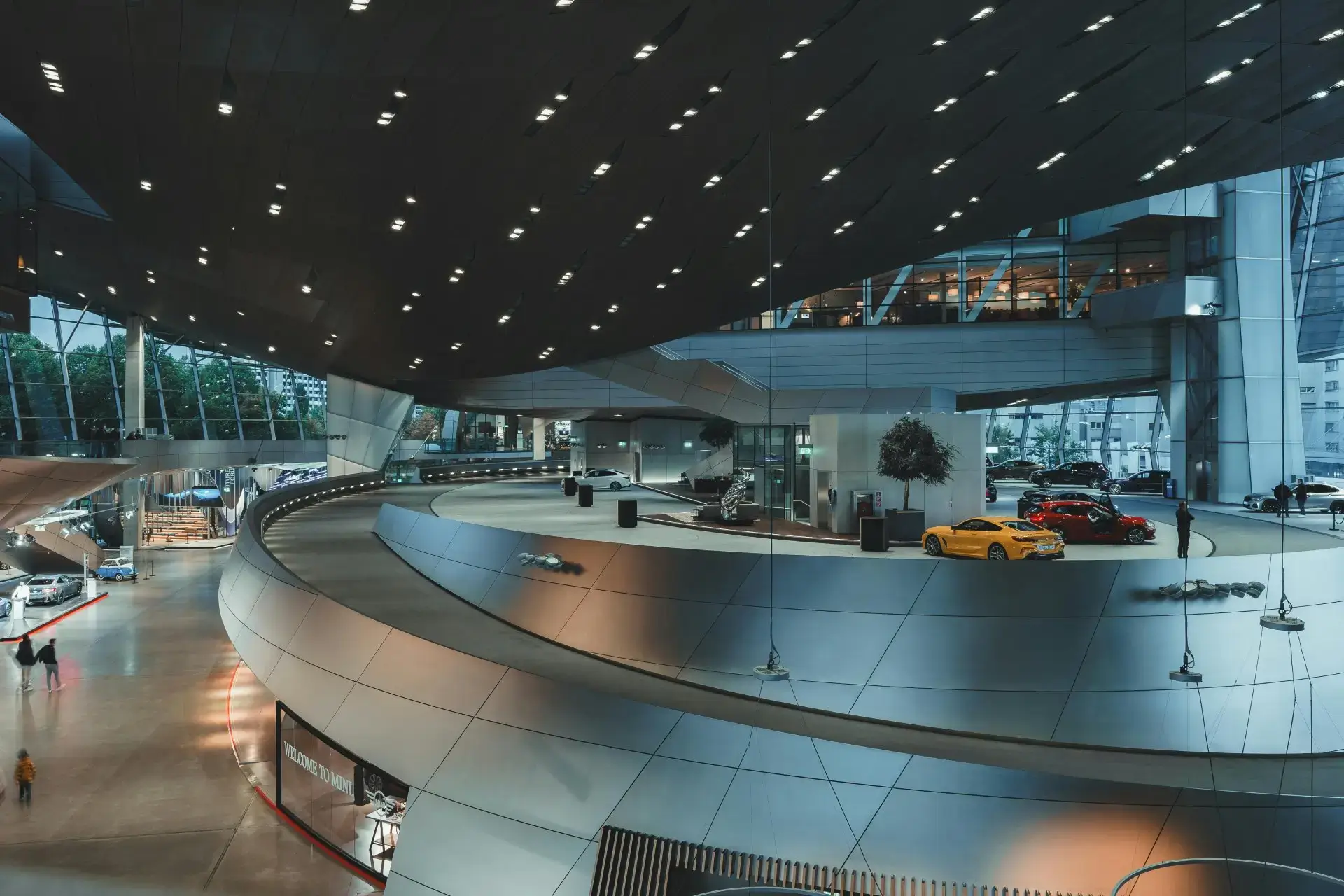
Apple’s town-square stores, the new BMW Museums, and Amazon’s “Just Walk Out” stores are successful because they activate all senses while maintaining digitally orchestrated simplicity.
Systems Thinking: The Hidden Engine Behind Integrated Success
Truly integrated experiences do not begin with screens or space. They begin with systems thinking.
This includes aligning; brand strategy, content systems, digital architecture, service workflows, interior & spatial design, technology stack, behaviour mapping, data flows, staff and operational choreography.
Phygital experiences fail when they are treated as isolated elements. They succeed when every component feeds into a single experience brain.
Case In Brief: Atlas SkillTech University
Atlas SkillTech wanted to present itself as a new-age, technology-forward educational ecosystem. Eureka Moment (EuMo) created a digital-first identity that extended into physical graphics, space branding, communication systems and campus experiences.
The result was a unified brand behaviour, seamless transitions between digital discovery, campus touchpoints and ongoing online interactions. And a system where every visual, interaction, or environment echoed the same future-forward personality.
This demonstrates how phygital experiences in education can help institutions feel global, contemporary, and student-centric.
Why Organisations Must Invest in Integrated Experience Design Now
The world is rapidly entering an era of hyper-personalised journeys, MX (mixed reality) interactions, Omnichannel customer behaviour, experience economy.
Brands that integrate all touch points today will lead their categories in five areas:
- Customer Loyalty & Trust
- Differentiation & Premium Perception
- Operational Efficiency
- Measurability & Data Insights
- Future Scalability
The Future is Not Physical. Not Digital. It’s Integrated.
The next era of growth belongs to those who will be able to unify all touchpoints into a continuous experience that feels intuitive, meaningful and unforgettable.
–
Photo by Vitaly Gariev on Unsplash



